MAX PAPPENHEIM
KEYS TO LIFE INTERVIEW SERIES

Was there a moment when you knew you wanted to be a sound designer and composer?
It happened by accident! Theatre sound design brings together my three great interests: music, sound/acoustics, and the spoken word. But it was only once I started doing it that I realised how much it brings these together.
How would you explain what a sound designer does to someone who’s never been to the theatre?
Set and costume designers make choices about what the audience sees; sound designers make choices about what the audience hears. Sometimes we provide sound effects; sometimes we enhance voices with microphones and effects; sometimes we select, edit or write music. A lot of the time we advocate for turning off noisy technical equipment or putting a carpet on the set to improve the acoustic! In the end most of what we do is about tone, and making the experience feel right.
Can you share a time when your sound design unexpectedly brought a scene to life?
In “The Glass Menagerie”, gentle rain drumming on the window made the scene between Jim and Laura seem cosy, safe and deeply romantic. As Jim revealed that he was in fact engaged, the rain slowly eased off – leaving just a tiny ticking clock in what now felt instead like a stuffy, claustrophobic room. I had planned these as “realistic” soundscaping, but the actors found the change in sound made the change in mood come alive for them.
When you start a new project, what’s the first thing you look to for inspiration — like the script or the director’s vision?
I try to respond equally to both! Most of the plays I’ve worked on have been brand new, which I enjoy because there are no precedents. So, often the vision and the play are essentially the same. But we are a collaborative team, so sharing the vision is very important.
Do you have a favourite sound or music moment you’ve created for a show? What made it special?
It’s all too rare to have live musicians onstage these days. Our quartet for ‘Henry V’ at the Sam Wanamaker Playhouse were a magnificent combination: bassoon, cello, bass viol and Nyckelharpa. The different musical backgrounds and approaches – to begin with we didn’t even agree on what pitch an A should be! – came together in a wonderful alchemy.
You run a choir and work with the London Choral Sinfonia—how does that influence your theatre work, and vice versa?
Choosing music for a church service (maybe a festival, or to suit a particular sermon theme or reading) often feels very similar to choosing or writing music for a scene in a play. Improvising on the organ in church was excellent preparation for doing the same in a rehearsal room – in both settings, we often “just need some appropriate music right now…”
What’s the most important advice you give to students learning sound design or composition?
Find out what helps you to relax, and find ways to put distractions to the side and be receptive and creative in the moment. It’s all too easy to busy yourself in the smaller, easier things and “run out of inspiration” – which is a symptom not a cause. And: learn the keyboard shortcuts to all your software; clicking with the mouse wastes a lot of time.
Is there a sound in everyday life that you find surprisingly interesting or inspiring?
Clocks, rain and crickets – I can listen to these indefinitely! I recently did a long overnight cycle the Dunwich Dynamo – and the crickets chirped all through the night on both sides of the road in glorious stereo.
Outside of work, what brings you joy or helps you stay balanced?
Making time, even when work is busy, to pause and admire a view, enjoy a little scene playing out on the street, or get lost down another route. Work often involves travel, sometimes abroad, so I make time to explore.
Do you have a personal connection or memory involving a Markson piano?
Alfredo from Markson’s tunes our piano at home, and when he’s finished it’s always a joy to sit and play it for the first time.
How much does the quality or character of a piano matter in your work?
It’s everything! For “The Forsyte Saga” at the RSC this Christmas, we will be recording the music on a pristine Steinway – reflecting the purity that the Victorian central character aspires to. For “My Cousin Rachel” we borrowed a gorgeous square piano, and its sound evoked a house full of heirlooms kept for centuries. Whereas for “Brixton Calling”, which follows the history of the Brixton Academy, we’re featuring pop and honky-tonk pianos. In the end, a piano is a voice, and needs casting – just like an actor
Photo Credits:
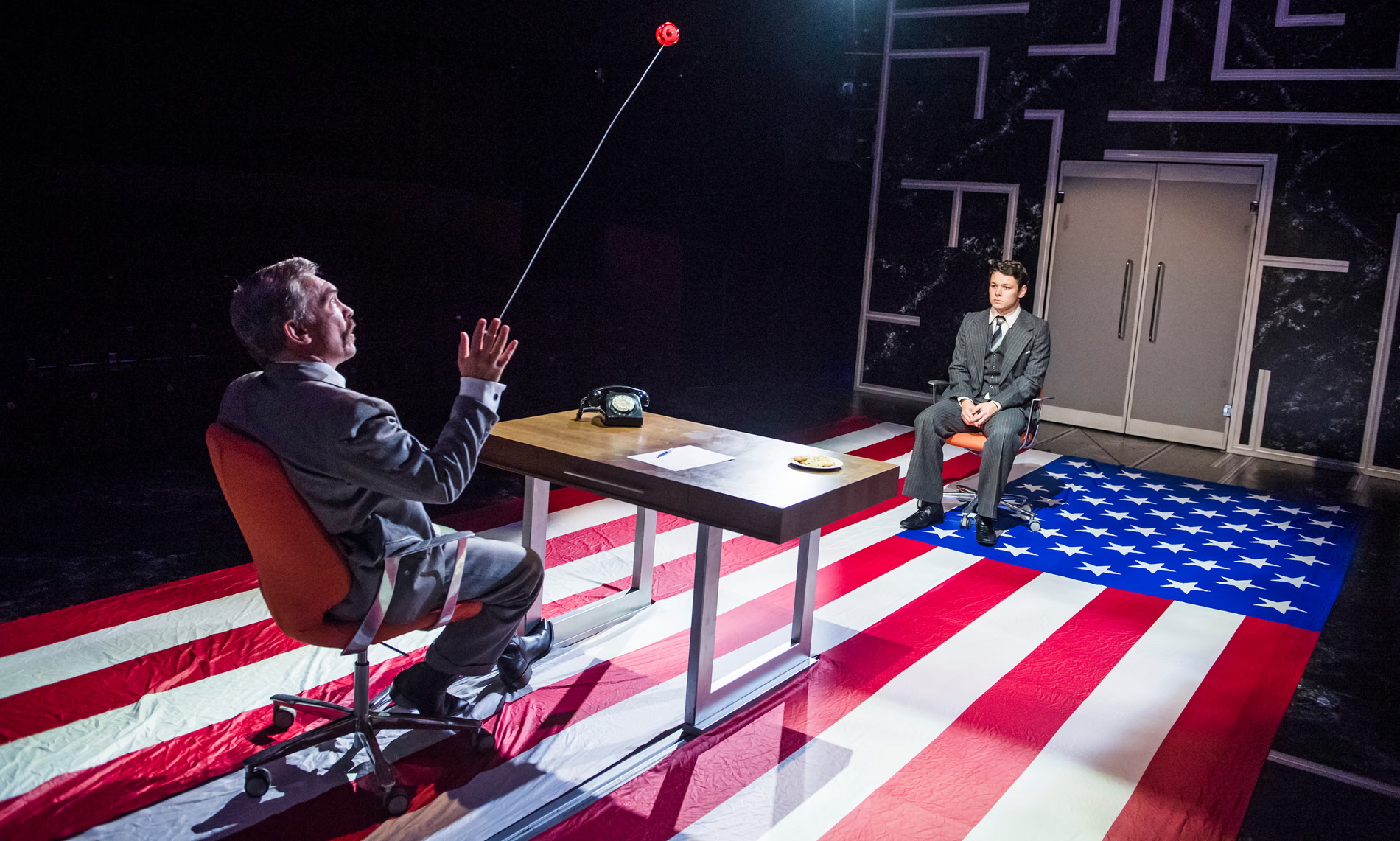
Pappenheim on Beth Steel’s Labyrinth. Photograph: Tristram Kenton/The Guardian
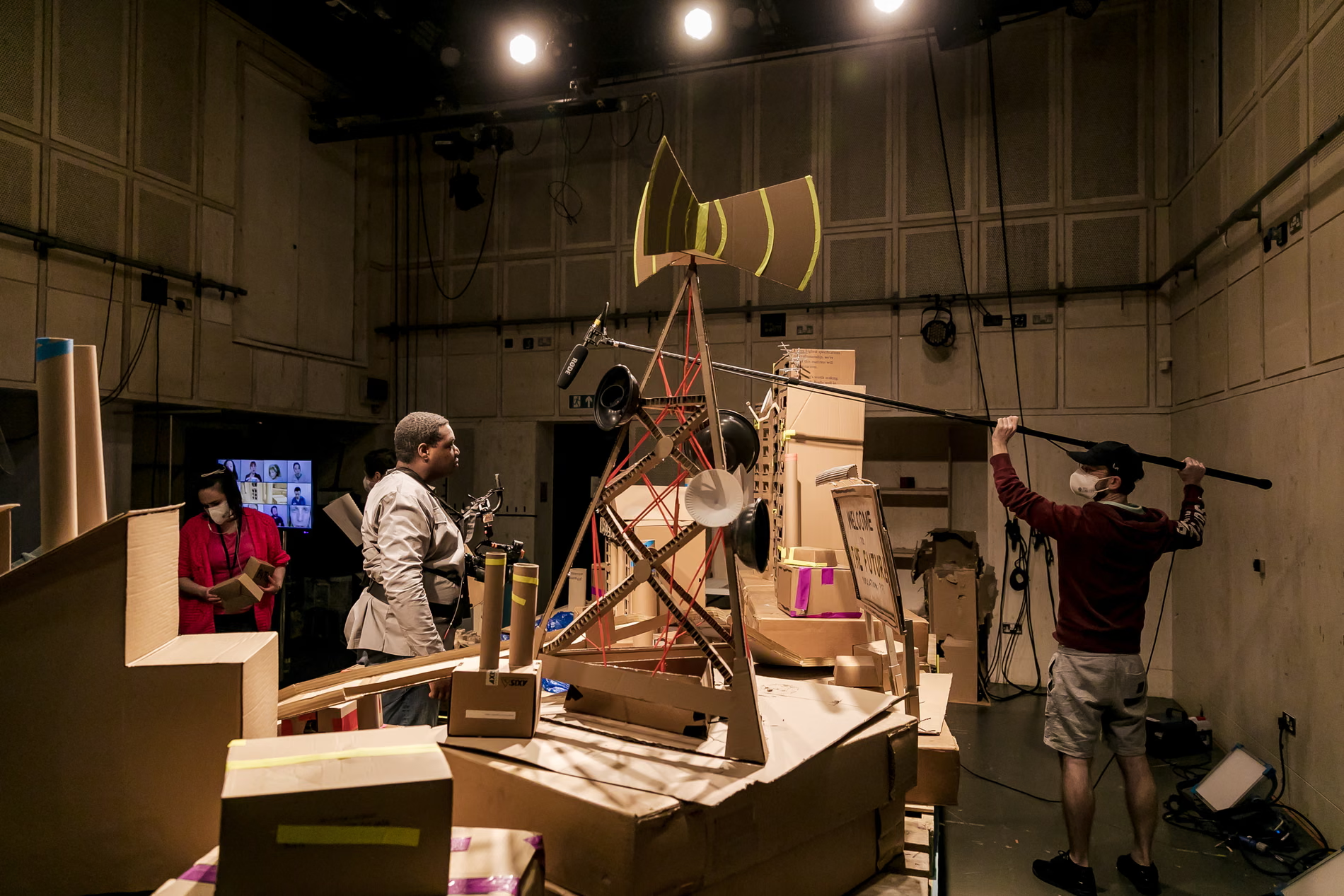
Pappenheim at work on Assembly for the Donmar Warehouse, London. Photograph: Richard Davenport/The Other Richard
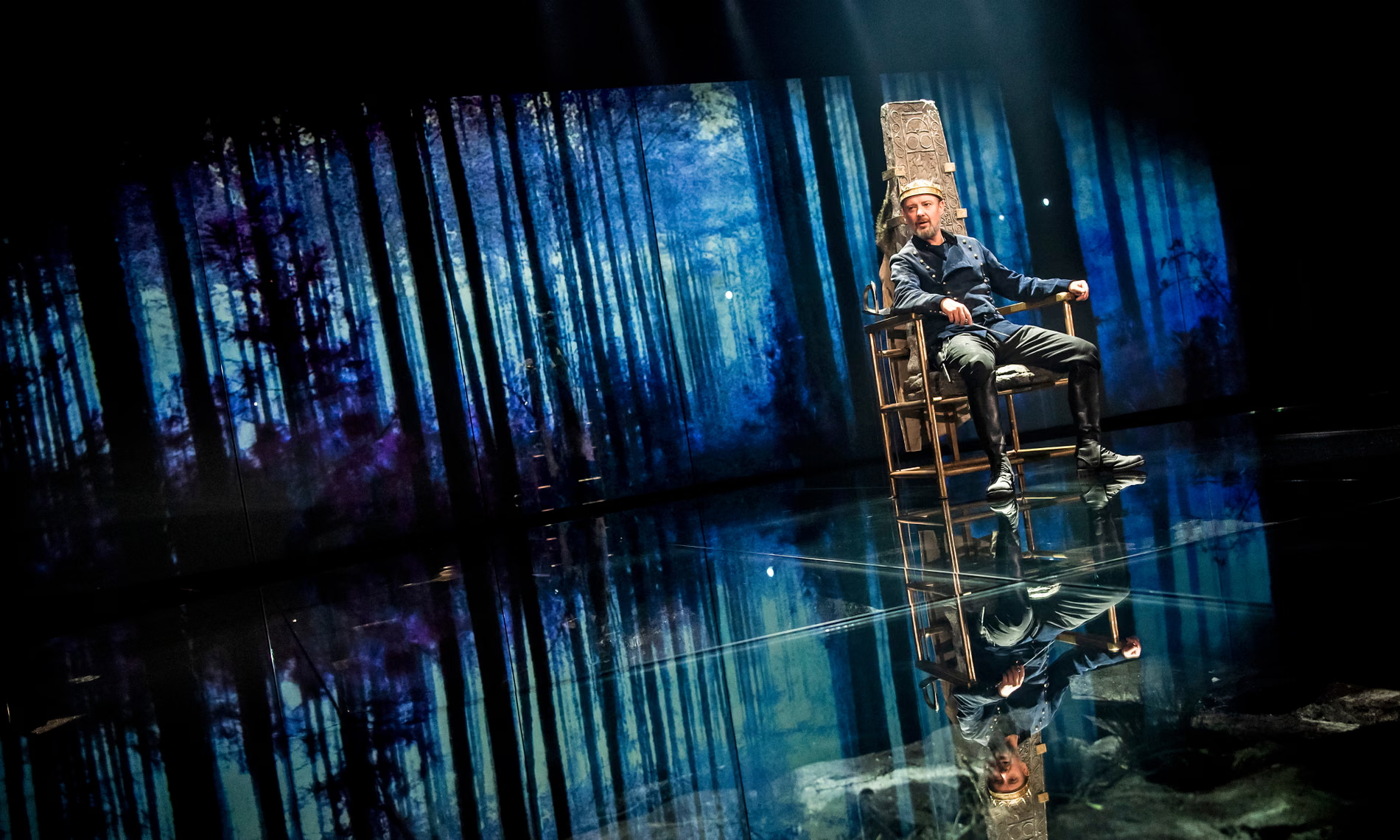
Macbeth at Chichester Festival theatre. Pappenheim was sound designer and composer. Photograph: Tristram Kenton/The Guardian
RELATED ARTICLES